Photographs of British royals on American soil do more than document diplomatic trips—they capture the evolving relationship between two nations bound by history, language, and global influence. As King Charles III embarks on his first state visit to the United States, images from past royal tours resurface, offering a visual narrative of tradition, soft power, and shifting public sentiment.
These moments, frozen in time, reveal not just pageantry but political nuance, cultural exchange, and the monarchy’s role in international relations. From Queen Elizabeth’s debut visit to Prince Harry’s more informal appearances, each trip left a visual footprint that shaped perceptions on both sides of the Atlantic.
Queen Elizabeth’s 1957 State Visit: The First Monarch to Tour Washington
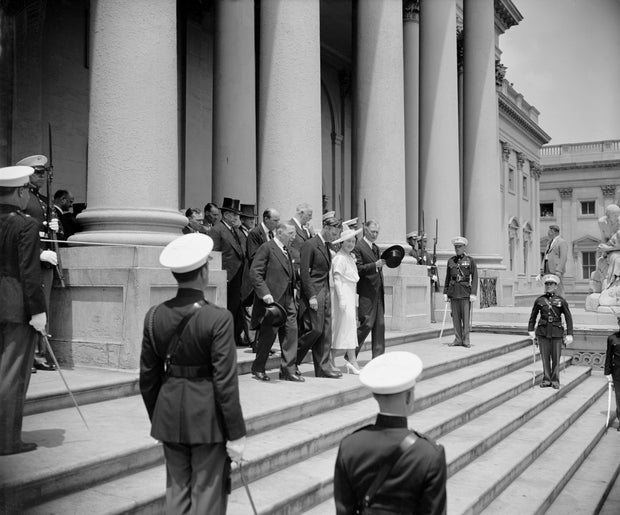
In October 1957, Queen Elizabeth II became the first reigning British monarch to make a formal state visit to the United States. The trip was steeped in Cold War symbolism—the U.S. and U.K. standing united against Soviet expansion—and the imagery from that week remains among the most iconic in royal-American history.
Photographs show the Queen and President Dwight D. Eisenhower reviewing troops at Camp David, laughing over tea at the White House, and attending a lavish state dinner where she wore the Vladimir Tiara and the famed "Maple Leaf" brooch, a gift from Canada. One widely circulated image captures her riding down Pennsylvania Avenue in an open-top car, waving with textbook precision beside a smiling Eisenhower.
This visit wasn’t just ceremonial. It reinforced the “Special Relationship” at a critical geopolitical moment. The photos, carefully orchestrated by both governments, projected unity, stability, and modern monarchy in action. Media coverage was overwhelmingly positive, with American newspapers praising her poise and accessibility.
Common mistake: Many assume this was her first U.S. visit. In fact, she toured Canada in 1951 and stopped briefly in Newfoundland (then not part of Canada) and Washington D.C. as Princess Elizabeth. But 1957 marked her first full state visit as Queen.
The 1982 Reagan Visit: Hollywood Glamour Meets the Crown When Queen Elizabeth and Prince Philip returned in 1982, the world had changed—and so had the optics of royal diplomacy. This time, they were hosted by President Ronald Reagan and First Lady Nancy Reagan, and the visit dripped with Hollywood flair.
Photographs from the trip highlight a different kind of soft power. The Queen is seen laughing on horseback at the Reagans’ ranch in California, wearing a crimson coat and matching hat, a rare moment of relaxed informality. Another iconic shot shows her toasting Reagan at a state dinner, the Gold Room glittering behind them.
But the most enduring image may be her riding sidesaddle in a parade through Charlottesville, Virginia, dressed in full equestrian regalia. The picture became a media sensation—not just for its elegance, but because it subtly countered growing skepticism about the monarchy’s relevance.
This visit also marked a turning point in how royal trips were covered. With 24-hour news cycles emerging and photojournalism booming, every gesture was scrutinized. The British press questioned the cost, while Americans largely embraced the spectacle. The photos, in turn, became tools of public relations—emphasizing warmth, longevity, and continuity.
Prince Charles and Diana’s 1991 Tour: A Marriage in the Spotlight By the time Prince Charles and Princess Diana visited the U.S. in 1991, their marriage was fraying. Yet the images from their trip to Washington, D.C., and New York painted a picture of unity—carefully constructed, but effective for the moment.
:max_bytes(150000):strip_icc():focal(749x0:751x2)/king-charles-III-state-visit-of-the-president-of-the-republic-of-south-africa-112222-4-806910a78d3444cf87ef8dcb828390e0.jpg)
Photographs show the couple smiling side by side at a White House luncheon with President George H.W. Bush, touring the Statue of Liberty, and attending a gala at Lincoln Center. But sharp-eyed observers noted the distance between them—literally and emotionally. In one notorious shot, Diana stands alone on a balcony, gazing into the New York night, while Charles talks to aides indoors.
Still, Diana’s presence dominated the visual narrative. Her fashion—particularly a shimmering blue Victor Edelstein gown worn at a state dinner—became front-page news. Her interactions with children, veterans, and AIDS patients generated some of the most humanizing royal images of the decade.
The trip underscored a shift: while the monarchy remained institutionally significant, public interest increasingly focused on individual personalities. The photos didn’t just document a diplomatic visit—they previewed the tabloid era that would soon consume the royal family.
Practical example: Modern social media strategists can learn from how Diana’s team managed optics. Even during personal turmoil, she maintained a consistent, empathetic visual brand—something today’s public figures still emulate.
The 2007 Jubilee Tour: A Queen at the Peak of Respect
Queen Elizabeth returned in 2007 to commemorate the 400th anniversary of the Jamestown settlement—the first permanent English colony in America. The trip was less about politics, more about shared heritage.
Photographs from Virginia show the Queen in earth-toned coats and headscarves, laying wreaths at colonial sites, and smiling beside President George W. Bush. One striking image captures her standing solemnly at a cross marking the original Jamestown fort, a quiet nod to the complex legacy of empire.
This visit stood out for its historical introspection. Unlike earlier trips that emphasized Anglo-American unity, this one acknowledged a more nuanced past. The visuals were understated, respectful—reflecting the Queen’s own aging presence and the evolving role of the monarchy.
Media coverage was respectful but less frenzied. The public no longer saw her as a glamorous figure, but as a symbol of endurance. The photos from 2007 don’t dazzle—they resonate.
Prince Harry’s 2013 and 2018 Visits: Modern Royalty, New Rules
Prince Harry’s trips to the U.S. signaled a departure from tradition. His 2013 visit—centered on the Invictus Games he founded—was humanitarian, not diplomatic. Photos show him laughing with wounded veterans in Virginia, participating in adaptive sports, and embracing service members.
By 2018, his relationship with Meghan Markle had transformed the narrative. Their joint appearance at the U.K. ambassador’s residence in Washington D.C. was widely photographed—not as a state function, but as a cultural moment. Images of the couple smiling under cherry blossoms went viral, blending royal charm with modern celebrity.
Harry’s U.S. appearances, captured in candid and social media-friendly shots, illustrated a new model: the “working royal” as advocate and influencer. Unlike formal state visits, these trips relied on emotional connection over protocol.
Limitation: Without official state backing, Harry’s visits lacked the diplomatic weight of past tours. But their visual impact—shared millions of times online—showed that influence no longer depends on titles alone.
King Charles III’s 2025 State Visit: Continuity in a Fractured Era
As King Charles III prepares for his first state visit to the U.S., the context is vastly different. The monarchy faces intensified scrutiny. Public support in both the U.K. and U.S. is more conditional. And the visual language of power has changed.

Early photos from his trip show him and Queen Camilla arriving at Andrews Air Force Base, greeted by President Joe Biden and First Lady Jill Biden. Images from the state dinner at the White House highlight tradition—crystal, military bands, formal attire—but also subtle modernity: a diverse guest list, climate-focused speeches, and a menu featuring sustainable ingredients.
One photo, widely shared, captures Charles speaking with young climate activists before a reception. It’s a calculated image—positioning him not just as a monarch, but as a steward of global issues he’s long championed.
Unlike past visits centered on alliance-building, this trip navigates a fragmented world. The photos must do double duty: uphold tradition while signaling relevance. Every frame is scrutinized for authenticity.
Workflow tip: For image selection, royal teams now prioritize emotional authenticity over rigid formality. A genuine smile, a moment of connection—these images travel further in the digital age than stiff processions.
The Power of Royal Photos: More Than Just Snapshots
Photographs from royal visits are not incidental—they are strategic. They shape public perception, reinforce diplomatic narratives, and preserve legacy. Each image serves multiple audiences: the U.S. public, the British electorate, global media, and history itself.
The most effective photos balance formality with humanity. Think of Queen Elizabeth dancing with President Johnson in 1961—a spontaneous moment that symbolized friendship. Or Charles kneeling to speak with children in Harlem in 2023, a gesture of accessibility.
These visuals also reflect broader trends. In the 1950s, images emphasized hierarchy and unity. By the 2000s, they showcased personality and cause-based engagement. Today, they must convey both continuity and change.
Realistic use case: Historians use these photos to trace shifts in public diplomacy. Journalists analyze poses, clothing, and settings for subtle messages. And ordinary people use them to form opinions about a family they’ll never meet.
What These Images Reveal About the Future
As King Charles III continues his reign, the visual record of royal visits will remain a vital tool. But the rules have changed. In an age of misinformation and declining institutional trust, authenticity matters more than ever.
The monarchy no longer controls the narrative—photos go viral, are cropped, memed, or politicized within minutes. Yet the power of a well-composed image endures. When Charles stands beside the President, when Camilla greets survivors of a natural disaster, when their grandchildren wave from a motorcade—the camera still holds weight.
These visits, documented in photos, are not just about diplomacy. They are about identity—national, cultural, and human.
For the public, the takeaway is clear: look beyond the crown. Watch the hands, the eyes, the small gestures. That’s where the real story lives.
Actionable insight: When analyzing royal photos, ask: Who is included in the frame? What are they doing? What message does the setting convey? These details often reveal more than the official press release.
FAQ What was the first British royal state visit to the U.S.? Queen Elizabeth II’s 1957 trip was the first state visit by a reigning British monarch.
Why are royal visit photos so widely shared? They symbolize diplomacy, tradition, and human moments within a formal institution.
Did Prince William visit the U.S. as part of a state tour? No, William has visited for charity work and tourism, but not on an official state visit.
How does King Charles’ visit differ from Queen Elizabeth’s? It emphasizes climate and social issues, reflecting modern priorities over Cold War alliances.
Are royal state visits funded by taxpayers? In the U.K., the Sovereign Grant covers some costs, but host nations often shoulder security and logistics.
Do royal photos impact public opinion? Yes—well-timed, authentic images can boost approval and humanize the monarchy.
Can the U.S. refuse a royal state visit? Technically, yes—the invitation comes from the President and requires coordination.
FAQ
What should you look for in British Royal Visits to the U.S. Through the Years in Photos? Focus on relevance, practical value, and how well the solution matches real user intent.
Is British Royal Visits to the U.S. Through the Years in Photos suitable for beginners? That depends on the workflow, but a clear step-by-step approach usually makes it easier to start.
How do you compare options around British Royal Visits to the U.S. Through the Years in Photos? Compare features, trust signals, limitations, pricing, and ease of implementation.
What mistakes should you avoid? Avoid generic choices, weak validation, and decisions based only on marketing claims.
What is the next best step? Shortlist the most relevant options, validate them quickly, and refine from real-world results.