Every year, hundreds of workers suffer serious injuries—or worse—because machinery was accidentally energized during maintenance. The solution? A well-documented, accessible lockout tagout (LOTO) procedures PDF that ensures every employee follows the same safety protocol.
Yet, most companies either don’t have a standardized LOTO PDF or use outdated, generic versions that fail to reflect real equipment and workflows. This gap creates confusion, compliance risk, and real danger.
A lockout tagout procedures PDF isn’t just a formality—it’s a live safety document. When done right, it becomes the single source of truth for isolating hazardous energy sources across your facility.
This guide walks you through how to build, use, and maintain an effective LOTO procedures PDF that meets OSHA standards and keeps your team safe.
Why a Lockout Tagout Procedures PDF Matters
Lockout tagout isn’t optional. OSHA standard 29 CFR 1910.147 requires employers to implement energy control procedures to protect workers during servicing and maintenance. A LOTO procedures PDF is the most efficient way to standardize and distribute these rules.
But a PDF isn’t just digital paperwork. It’s a tool. When accessible on tablets, posted near machinery, or included in safety onboarding, it turns abstract rules into actionable steps.
Consider this: a technician needs to change a blade on a conveyor system. Without a clear, equipment-specific LOTO PDF, they might skip isolating a secondary power source—say, pneumatic pressure. That oversight can lead to sudden movement and severe injury.
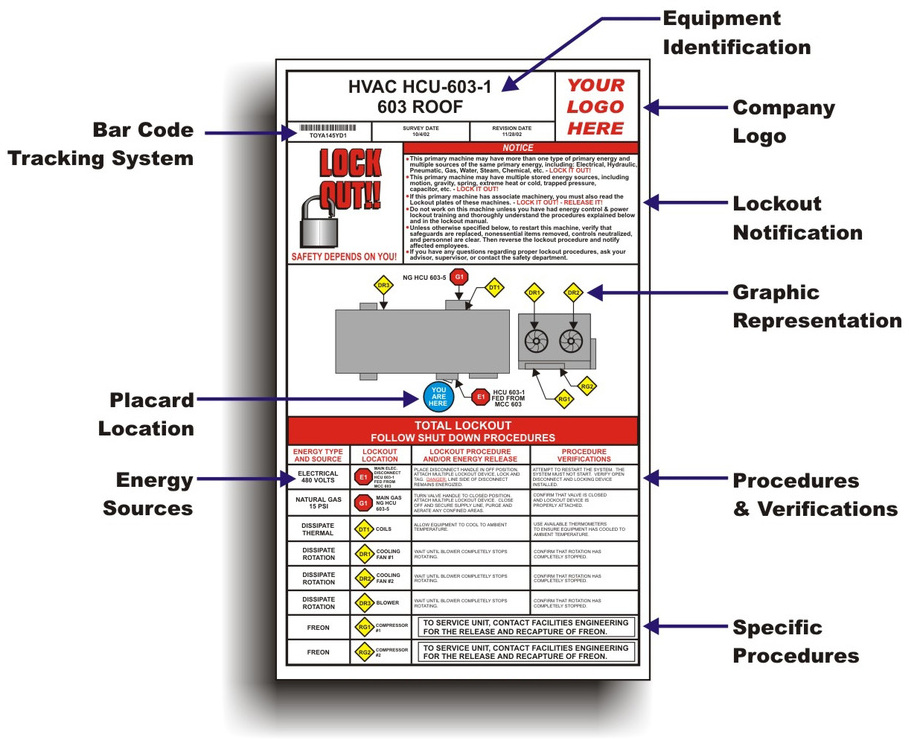
A well-crafted LOTO procedures PDF eliminates guesswork. It specifies: - Exact shutdown sequences - Energy source locations - Lock placement points - Verification methods - Authorized personnel
Without it, compliance is theoretical, not operational.
Key Elements of an Effective LOTO Procedures PDF
A good LOTO PDF does more than check a regulatory box. It must be usable under pressure. Here’s what every high-quality document should include:
1. Equipment-Specific Instructions Generic steps like “turn off machine” are useless. The PDF must list the exact model, location, and energy types involved (electrical, hydraulic, mechanical, etc.).
2. Step-by-Step Isolation Process Each action should be numbered and unambiguous. Example:
- Press E-stop button on control panel.
- Open disconnect switch #MC-12, located behind access panel B.
- Confirm zero energy using voltage tester on terminals T1–T3.
3. Visual Aids Diagrams, photos, or icons showing lock points, valve positions, or circuit breakers increase clarity. A simple image of a locked disconnect switch prevents misidentification.
4. Authorized Personnel List Who can perform the LOTO? The PDF should name roles (e.g., “Maintenance Technician Level II”) or require supervisor approval.
5. Verification and Testing Steps Never assume. Include a step like: “Verify isolation by attempting to start the machine using the normal operating controls—ensure no movement occurs.”
6. Group Lockout Protocol For team maintenance, the PDF must explain how to use a group lockout box, with each technician applying their own lock.
7. Release and Restart Procedure Equally important: how to safely remove locks, re-energize, and notify affected employees.
Common Mistakes in LOTO Procedures PDFs
Even compliant companies make critical errors. Avoid these pitfalls:
1. Copy-Paste Templates Using a generic PDF from an online source without tailoring it to actual equipment is worse than useless. OSHA doesn’t accept “one-size-fits-all” procedures.
2. Outdated Information Machines get upgraded. Controls move. If your LOTO PDF isn’t reviewed annually—or after changes—it becomes a liability.
3. Missing Energy Sources Electricity is obvious. But what about stored hydraulic pressure, gravity-fed systems, or capacitors? Incomplete hazard identification is a leading cause of LOTO failures.
4. No Verification Step Many procedures skip the “prove it’s off” phase. A machine might appear de-energized, but residual energy can still cause harm.
5. Poor Accessibility If the PDF is buried in a shared drive or only available in English at a multilingual site, it won’t be used. Host it near equipment or on mobile devices.
How to Create a Lockout Tagout Procedures PDF
Creating an effective LOTO PDF isn’t about fancy design—it’s about precision and clarity. Follow this workflow:
Step 1: Conduct a Machine Audit List every machine requiring LOTO. Identify all energy sources and isolation points.
Step 2: Develop Procedures with Maintenance Teams Involve the people who actually service the equipment. Their input ensures accuracy and buy-in.
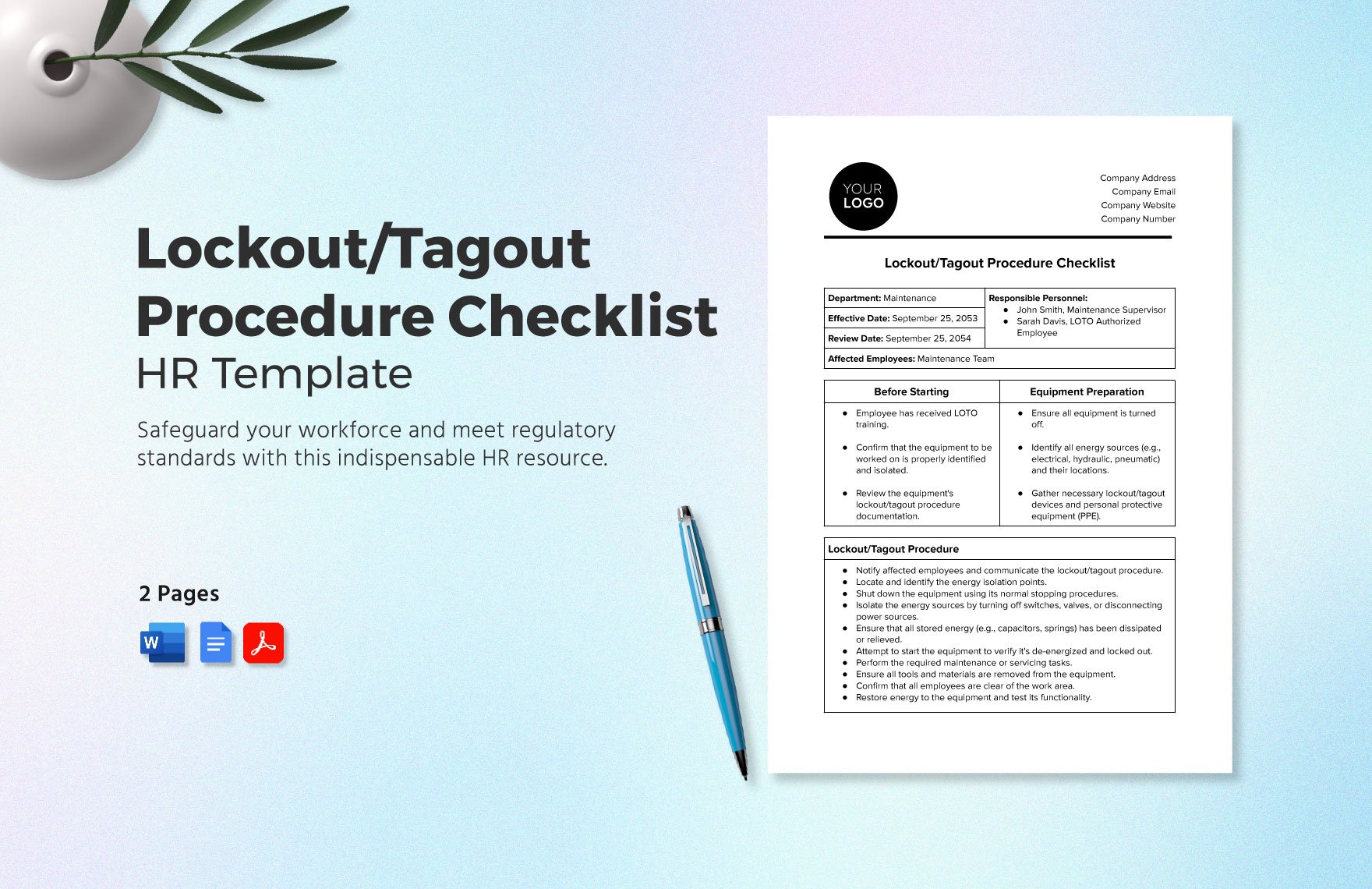
Step 3: Draft Using a Standard Template Use a consistent format across all machines. This reduces confusion and speeds training.
Step 4: Add Visuals and Safety Warnings Insert equipment photos, lock point diagrams, and bold warnings like: WARNING: Failure to follow these steps may result in serious injury.
Step 5: Review and Approve Have safety officers and supervisors sign off. Update version control and date.
Step 6: Distribute and Train Ensure every affected employee has access and understands the procedure. Use the PDF in training sessions.
Step 7: Review Annually Reassess each LOTO PDF at least once a year—or immediately after equipment changes.
Best Tools to Create and Manage LOTO Procedures PDFs
You don’t need complex software, but digital tools can streamline creation and access. Here are five effective options:
| Tool | Key Features | Best For |
|---|---|---|
| SafetyCulture (iAuditor) | Mobile LOTO templates, real-time audits, PDF export | Field teams, multi-site operations |
| EHS Insight | Procedure builder, compliance tracking, version control | Mid to large facilities |
| LockOut/TagOut Pro by Seton | Pre-built templates, label integration, OSHA alignment | Quick setup, small businesses |
| Microsoft Word + Adobe Acrobat | Full customization, password protection, annotations | Companies needing full control |
| FACILITI by Accruent | Asset-linked procedures, mobile access, integration with CMMS | Plants using computerized maintenance systems |
Choose based on your scale and tech stack. The goal is a PDF that’s easy to update, distribute, and use in real conditions.
Real-World Use Cases
Case 1: Food Processing Plant A meat grinder required maintenance. The old LOTO PDF didn’t mention a secondary hydraulic line. During servicing, residual pressure caused sudden blade movement. After the near-miss, the team revised the PDF to include: - Depressurize hydraulic system via relief valve - Confirm pressure gauge reads 0 psi - Install lock on hydraulic isolation valve
The updated PDF now includes a photo of the valve location.
Case 2: Manufacturing Facility A production line had 12 machines, each with its own LOTO. Technicians wasted time searching for procedures. The safety team consolidated them into a single indexed PDF with bookmarks and a table of contents. Downtime during maintenance dropped by 18% due to faster access.
Case 3: Chemical Plant During a shift change, a worker removed a lock without verifying the machine was clear. The updated LOTO PDF now requires: - A sign-off sheet - Two-person verification - Radio confirmation with operations
The PDF includes a checklist for each step.
OSHA Compliance and the Role of Your PDF
OSHA doesn’t require your LOTO procedure to be in PDF format—but it does require it to be documented, available, and followed. A PDF meets all three if: - It’s accessible to authorized employees - It’s up to date - It’s used during training and audits
During an inspection, OSHA will ask to see your written procedures. A disorganized, generic, or missing PDF can result in citations averaging $15,000 per violation.
Your LOTO procedures PDF must also support required annual audits. Use it as the benchmark when observing employee performance. Note discrepancies and revise the document accordingly.
Making Your LOTO Procedures PDF Actionable
A PDF that sits in a folder is worthless. Make it a working document:
- Print and post near equipment for quick access
- Sync to tablets used by maintenance crews
- Include in onboarding packets
- Link in work order systems
- Add QR codes on machines that scan directly to the PDF
Train employees to treat the LOTO PDF like a pre-flight checklist—non-negotiable and followed every time.
Final Thoughts: Your LOTO PDF Should Save Lives
A lockout tagout procedures PDF is more than compliance paperwork. It’s a frontline defense against preventable tragedies.
Don’t settle for a generic template downloaded from an unverified site. Invest time in creating accurate, specific, and usable documents tailored to your equipment and workforce.
Update them regularly. Train with them. Audit against them.
When an employee reaches for a lock, their safety depends on what’s in that PDF. Make sure it’s clear, complete, and correct.
FAQ
What should be included in a lockout tagout procedures PDF? It should list equipment details, shutdown steps, energy source locations, lock points, verification methods, authorized personnel, and restart procedures.
Can a LOTO procedure be digital? Yes. OSHA accepts electronic procedures if they’re accessible, secure, and used during training and audits.
How often should LOTO procedures PDFs be updated? At least annually, or immediately after equipment changes, safety incidents, or process updates.
Who can perform lockout tagout? Only authorized employees trained in energy control procedures specific to the equipment.
Do I need a separate LOTO PDF for each machine? Yes. Procedures must be equipment-specific. Group similar machines only if energy sources and controls are identical.
Can I use a free LOTO PDF template from the internet? Only as a starting point. It must be customized to your machines, energy sources, and facility layout.
What’s the penalty for not having a LOTO procedures PDF? OSHA can issue citations up to $15,625 per violation, especially if an injury occurs due to missing or inadequate procedures.
FAQ
What should you look for in Lockout Tagout Procedures PDF Guide for Workplace Safety? Focus on relevance, practical value, and how well the solution matches real user intent.
Is Lockout Tagout Procedures PDF Guide for Workplace Safety suitable for beginners? That depends on the workflow, but a clear step-by-step approach usually makes it easier to start.
How do you compare options around Lockout Tagout Procedures PDF Guide for Workplace Safety? Compare features, trust signals, limitations, pricing, and ease of implementation.
What mistakes should you avoid? Avoid generic choices, weak validation, and decisions based only on marketing claims.
What is the next best step? Shortlist the most relevant options, validate them quickly, and refine from real-world results.




:max_bytes(150000):strip_icc():focal(728x275:730x277)/princess-catherine-prince-william-donald-trump-king-charles-iii-trump-state-visit-uk-windsor-091725-8672599a27214b6f8ffdbb07fd7596e4.jpg)
